Six Kinds of Alienation, One Rule: Everything Leaves a Trace — Except You
On 'Big-City Syndrome: Six Kinds of Alienation in Modern Life'
六种异化,一个共同点:什么都要留下痕迹,除了你自己
读梦旅人《“大城市症”:现代生活的六种异化》

Eight meetings, a hundred messages, and no answer to what you made. The same blankness runs through time, relationships, even the question of who you are. The thing that matters most happens to leave no trace at all.
An essay on "big-city syndrome" splits urban life into six kinds of alienation: labour, time, spectacle, relationships, consumption, and the self. Each one reaches a little further inside, and the last line is a question — without those labels, who do you think you are?
I came away with an uncomfortable feeling. These don't read like six diseases. They read like six sites of the same one.
Eight meetings, and no answer to what I made
Eight meetings in a day, a hundred messages, three drafts of the same proposal, seven departments pulled in to align. You close the laptop and cannot answer a simple question: what did I actually make?
The sharpest paragraph in the piece. What stings is not the exhaustion — it is that the exhaustion adds up to nothing.
Marx's account of alienation starts from compulsion: the worker owns neither the product nor the process, and the machine sets the pace. The people in ergonomic chairs today get free coffee, open-plan desks, flexible hours. The product still isn't theirs. Only now the not-having-it is phrased more kindly: not exploitation, but being part of a big project.
There is another passage I liked. For decades, companies trained people to be accurate, fast, stable, process-abiding, template-following, measurable, and free of personal randomness. Then the real machine arrived. Faster, steadier, cheaper — the only difference being that it does not have an existential crisis on Monday morning.
Being trained into a standard part was supposed to make you hard to replace. A standard part is, by definition, replaceable.
How many times did you say "align", "sync", "circle back" the last time you explained your job — before you managed to say what you actually made?
The time gets saved. Then what?
In The Human Condition, Hannah Arendt separates labour, work and action. Her worry was not that people have to labour, but that the logic of sustaining life and production keeps expanding until it swallows the other forms of activity.
It has. Dishwashers, dryers, cars, instant messaging, collaboration software, AI — every one of them saves time. The saved time does not turn into free time. It turns into preparation for the next thing.
Rest needs a justification, and the justification is usually "so I'll be better tomorrow". Rest for its own sake is not allowed. You may lie down, but you are expected to lie down doing sit-ups.
When was the last time you spent two straight hours doing nothing and didn't feel you had lost something?
Rich in experiences, poor in experience
When Guy Debord wrote about "the spectacle", he did not mean attractive photographs. He meant a change in how we relate to the world: we come to understand how things are through how they look.
City life is close to a showroom for that theory. A walk in the park needs to be called a Citywalk. A free hour needs to be called a GAP hour. Before you go anywhere you check whether others have photographed it, and afterwards you assemble the nine-grid. You write the caption before you arrive.
So two selves move in: one lives the day, the other directs it from behind the lens. You come home with two hundred photos and three things you remember.
Rich in experiences, poor in experience — the cheapest and most accurate sentence in the original piece.
The last time you went out, did you decide what to photograph before you decided where to go?
Dinner with A, feelings with D
Miura Shunzo (三浦展) makes a counter-intuitive point in The Loneliness Society (孤独社会): loneliness is not caused by having no friends. It is caused by connections multiplying while relationships get lighter.
Thousands of contacts, dozens of group chats, strangers you can talk to at any hour — and very few people you actually want to see.
The word dazi — a partner for one specific activity — captures it exactly. Meal partner, gym partner, travel partner, concert partner. It is a clever urban strategy: in a city with high turnover and no spare hours, you can skip the cost of a whole relationship and still get precise company. The word also writes a person's function straight into the way you address them. You are not someone's friend. You are a feature.
Dinner from A, travel from B, work from C, feelings from D. Calling people the way you call an API.
A relationship used to be the point. Now it is a means.
When did you last impose on a friend, and they didn't treat you as an imposition?
You are not buying the thing
Herbert Marcuse described how industrial society produces "false needs". He was talking about goods. The mechanism has since become finer: what is sold is not the object but a possible identity.
Why an eleventh lipstick when you have ten? Why does an ergonomic chair, carried home, feel like a life about to restart? Why is buying running gear more satisfying than running?
Because what you buy is the self that might exist once you own it. The espresso machine sells "the me with taste". Leggings sell "the disciplined me". Vinyl sells "the me with an ear".
Paid courses sell "the me who is growing". A trip to Iceland sells "the free me who has seen the world". The most successful product of this era is the ideal self.
The trouble is that the ideal self keeps updating. A few years ago you had to be refined; then you had to be relaxed. Just as you learned minimalism, maximalism came back. Just as you became a rational, disciplined person, you were told you needed "aliveness". Desire runs like an update that never finishes installing — every time it is nearly done, the version number jumps.
The last thing you bought — was it the thing, or the version of you that came with it?
Without the labels, who are you
Charles Taylor, writing about the malaise of modernity, names a paradox: the problem for modern people is not a lack of freedom. It is that we have more of it than any generation before.
You can choose the city, the job, the partner, the way of living. You can stay unmarried, have no children, change trades, take a year off, work from anywhere. The old answers to "who are you" have receded — and took some of the coordinates with them.
Something fills the space immediately. MBTI says what personality you have. Astrology explains your relationships. Attachment theory explains how you love. Career assessments say which job fits.
Your watch reports how you slept. The algorithm tells you what you like. If you don't know what you want, you can hand your chat logs to a model.
Without these labels, who do you think you are?
That is the question the original piece leaves at the end. It offers no options. The first five alienations at least let you answer "which layer am I on". This one asks what is left after the layers are taken away.
If you removed every score and label from the past year, how many sentences about yourself would you still have?
Six symptoms, one rule
Put the six together and the shared feature is not suffering, and not quite oppression. It is a thinner rule: everything has to leave a measurable trace.
Work must leave a trace — align, sync, review, report; before you close the laptop you have to be able to say what you contributed. Time must leave a trace — rest has to be explainable as investment, or it is waste. The spectacle must leave a trace — shoot it, post it, and only then did it happen. Relationships must leave a trace — the group photo matters more than how the two of you actually talked that day. Consumption must leave a trace — what you buy is a ticket to an identity you can display. The self must leave a trace — scores, types, body-fat percentage, all marks worn on the outside.
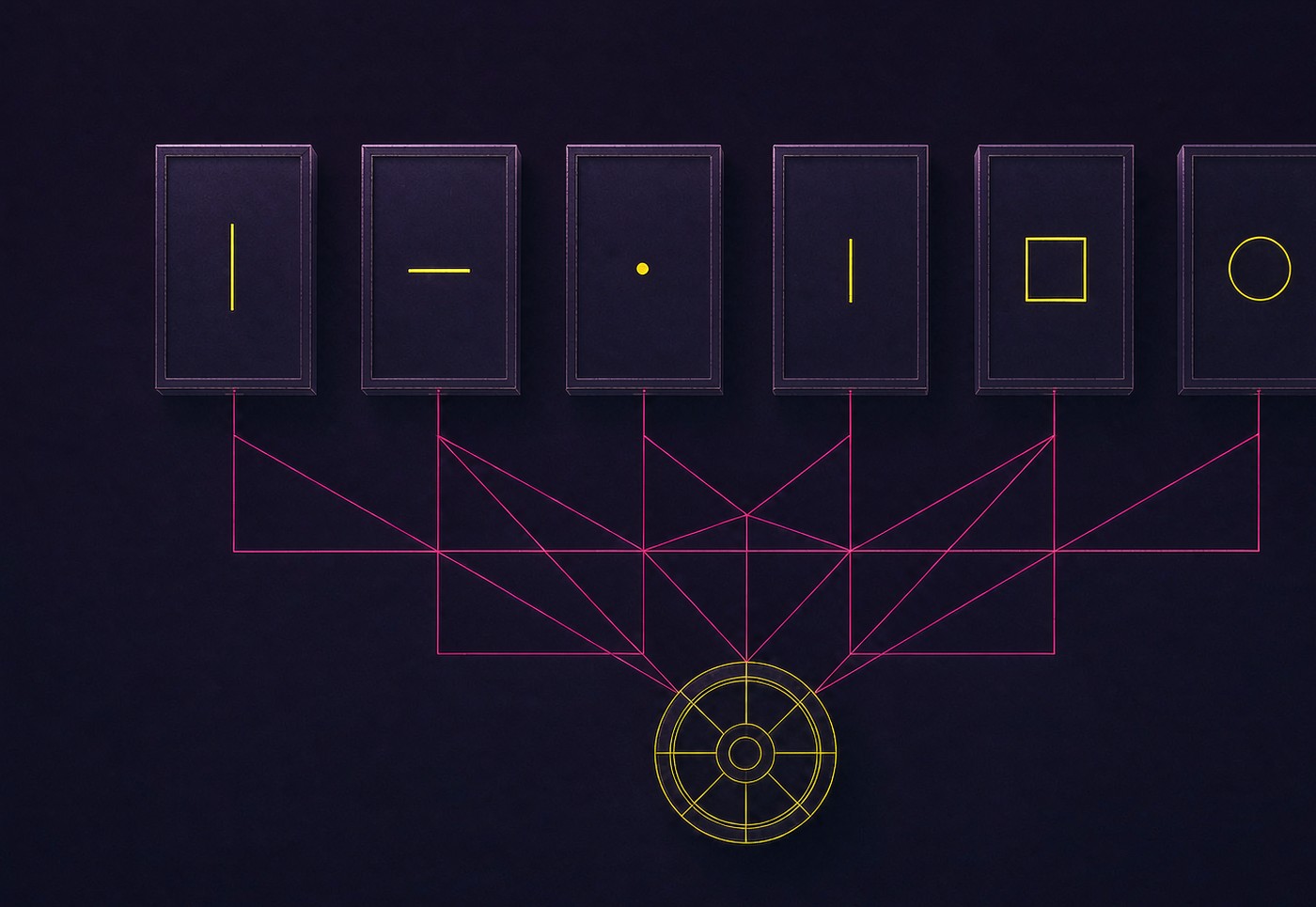
For Marx's generation, alienation was imposed: the product wasn't yours, the process wasn't yours, the pace was set from outside. Today's layer goes deeper — nobody is forcing you. You are handing in your own homework. The original essay puts it well: the biggest change is the shift from imposed alienation to self-alienation, freely chosen.
But what exactly are you handing in? A trace. And a trace, at bottom, is a translation: "I am alive" rendered as "a number someone can read off".
Heidegger opens Being and Time by pulling those two things apart. A being is something you can point at and say what it is — a table, a product, a person. Being is the fact of being alive at all; you cannot point at it or put it on a scale. He said Western philosophy had spent two thousand years studying beings and forgotten Being, and gave the condition a name: the forgetting of Being.
We commit that error every day, only without the name. Leaving a trace means translating Being into a being, and then honouring only the translation. Once the translation holds, the person has moved out of their life and into the ledger — the column is filled in neatly, and whoever it describes is no longer there.
Have you had this happen — you were enjoying something, then remembered it couldn't be told to anyone or posted anywhere, and half the pleasure went out of it?
Neither end of the pendulum looks like living
One layer further up sits Schopenhauer.
A person, he says, is at bottom a bundle of wanting, and he calls it will. Want unmet is pain. Want met, the pain withdraws, and what arrives right behind it is boredom. So a life swings like a pendulum between pain and boredom, and does not stop. The World as Will and Representation puts it bluntly: all willing arises from lack, and therefore from suffering.
Bleak — but it supplies the mechanism for the strange thing noted earlier: why the ideal self never finishes updating.
Because the moment you are satisfied, boredom arrives. So the wound clock dare not stop — an eleventh lipstick, a new version of the persona, the next order of magnitude on the account. Not because you are short of something now, but because stopping feels worse. Pain at least has a direction. Boredom has none.
Think back: the hardest hours are rarely the ones where you can't breathe for work. They are the ones just after something ends and before the next thing starts.
Six cures, one word
Follow each layer down and the remedies line up six ways. None is large. None requires a resignation letter.
For work: do something in your own time that delivers a result you can hold — cook a meal, grow a plant, write a script only you will run, make a small thing out of wood. Physical work returns a definite answer, and that answer does not need to go into a weekly report.
For time: practise wasting it on purpose. Stare at nothing for half an hour. Read a book with no takeaways. Walk with no destination. Zhuangzi put it plainly: everyone knows the use of the useful, but no one knows the use of the useless. Someone said it two thousand years ago; it has simply never made a good performance metric.
For the spectacle: delay the record. When you arrive somewhere, put the phone in your bag for the first hour. Or wait — if the moment is still with you a few days later, come back and photograph it then. What deserves keeping tends to still be there.
For relationships: keep a few inefficient friends. Allow the pointless talk, the argument that goes nowhere, the mutual inconvenience. Closeness rarely grows in the efficient part of the time you spend together. It shows up when you are a bit of a mess and the other person stays.
For consumption: before you pay, ask whether you would still buy it if nobody on earth would ever know.
For the self: switch off a few scoreboards. In the stretch of time when nothing is being scored, you find out what you actually care about.
Six separate things, one shared word: doesn't count.
The hour at the workbench does not go on a CV. The half-hour walk is not counted as steps, or counted and not posted. The trip with no photographs is a zero in the social ledger. The pointless talk with a friend was of no use to anyone. Nobody knows about the thing you bought. That stretch of time has no score.
All of it sits outside the ledger.
That is also why the six are harder than they sound. They share a price: at the time, it looks like you got nothing.
Someone spends an hour at the workbench. There is a pile of shavings on the floor and nothing else to show. By the accounting of this era, the hour equals zero.
Ask what he was thinking about during that hour and he probably can't tell you. He wasn't thinking about anything. There was some resistance under his hand, the wood turned smooth by degrees, he switched to a finer grit. That was it.
This lands exactly where Schopenhauer said it would. When you give a painting or a piece of music your full attention, he says, wanting recedes for a while — you are no longer a person who is always missing something, only a person looking. He called it the pure subject of knowledge. It is probably the least pessimistic page in the book.
The workbench, a potted plant, a walk with no destination — the same thing. They don't count not because they are worthless, but because in those hours nothing is being chased. The pendulum stops.
And the stop requires no qualifications. You don't have to earn enough first, reach some position first, fix yourself first. There is one available this afternoon. The cost is an hour. The ticket is being willing to let that hour produce nothing.
Schopenhauer has a more important line still: as he saw it, this turn is not something willpower achieves. It happens on its own once you have seen clearly. You cannot order the pendulum to stop. But you can stop staking your whole life on whichever end it happens to be swinging toward.
Which is why these hours outside the ledger are not fuel — not "rest so you can work again" — and cannot be turned into a new metric either. Meditate three times a week, thirty minutes each, tick the box: the clock is wound again, and this time you are the one winding it.
The pendulum will swing again. That is not failure; people live between those two points. The difference is that it used to swing you, and now you know it stops, and you know where.
This week, which stretch of time did you spend with no output, no photographs, and nobody you mentioned it to? During that stretch, what were your hands doing?